
You’ve undoubtedly wondered if Node.js belongs on the front end or the back end when you began learning web programming. This miscommunication makes perfect sense. Once restricted to browsers, JavaScript today runs whole programs, including servers and user interfaces. This change is mostly due to Node.js, which enables the usage of a single language throughout the entire stack.
However, Node.js does not fall under the frontend category just because it uses JavaScript. Frontend and backend differ not only in language but also in where and how the code operates. FITA Academy offers specialized Node.js training programs that help learners master server-side development, API creation, asynchronous programming, and efficient backend solutions for real-world web applications. This article will explain Node.js’s functions, how it differs from frontend technologies, and how you may easily ascertain its place in contemporary web development.
What Is Node.js and How Does It Work?
A runtime environment called Node.js enables programmers to run JavaScript code outside of web browsers. It is based on the robust V8 JavaScript engine, which turns JavaScript into machine code for quick execution. Node.js employs an event-driven, non-blocking architecture in contrast to conventional programming environments. This implies that it can perform several tasks at once without waiting for one to finish before beginning another. For instance, Node.js can handle several user requests on a server quickly and without experiencing any lag.
Building servers, APIs, and backend services is a typical use for Node.js. It processes client requests, communicates with databases, and replies to the user interface. One of the main characteristics that distinguishes it as a backend technology is its operational role.
Understanding Frontend vs Backend Development
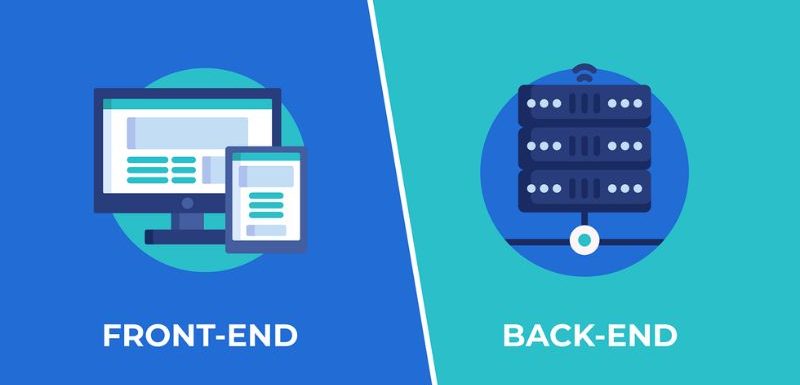
You must first comprehend the distinction between frontend and backend development in order to decide where Node.js fits in. The layouts, buttons, animations, and general user experience that users see and interact with in a browser are the main emphasis of frontend development. The frontend is powered by browser-based technologies like HTML, CSS, and JavaScript. Node.js Training in Chennai offers industry-oriented learning that helps professionals gain expertise in server-side development, API creation, asynchronous programming, and scalable backend solutions.
The reasoning behind the scenes, however, is handled by backend development. Databases, server connection, authentication, and application logic are all managed by it. Data transfer between the user interface and the server is ensured by the backend. For instance, when you connect into a website, the backend receives your data and verifies your credentials, while the frontend gathers your input. Because Node.js works in this back-end setting, it is obviously more suited for backend duties than front-end ones.
Why Node.js Is Considered a Backend Technology
Node.js is categorized as a backend technology primarily because it operates on a server rather than a browser. It manages application logic, communicates with databases, and processes requests. These are fundamental backend duties.
Its capacity to develop scalable network applications is another factor. Microservices, real-time apps like chat systems, and REST APIs are all commonly built with Node.js. All of these backend features enable front-end user interfaces. Despite using JavaScript, Node.js does not directly handle UI rendering. Rather, it drives the systems that supply those interfaces with data. It is evident from this division of responsibilities that Node.js is a part of the backend development layer.
Can Node.js Be Used in Frontend Workflows?
Despite being a backend technology, Node.js is crucial to frontend workflows. Node.js tools are frequently used by developers to oversee front-end projects. For example, Node.js powers development servers, build tools, and package managers. Node.js is used by tools like npm and Webpack to bundle code, optimize assets, and install dependencies. These tools assist in getting frontend code ready for production, but they don’t operate in the browser. B School in Chennai can significantly boost your career readiness and employability by enhancing your Node.js development skills, backend architecture knowledge, API integration techniques, and real-world application building expertise.
Server-side rendering (SSR), in which portions of the frontend are produced on the server before being transmitted to the browser, is another use for Node.js. Even in this scenario, Node.js is only supporting frontend performance; it is still handling backend duties. Therefore, Node.js does not function as a frontend technology, even while it helps with frontend workflows.
Comparing Node.js with Frontend Frameworks
The role of Node.js can be better understood by contrasting it with frontend frameworks such as Angular and React. These frameworks are made especially for creating user interfaces. They manage state, render components, and react to user input while operating within the browser.
In contrast, UI elements are not managed by Node.js. Buttons, animations, and layouts are not handled by it. Rather, it concentrates on data processing and forwarding to the frontend. Consider it this way: Node.js powers the backend operations, while React and Angular design the user interface. Despite using the same language as frontend frameworks, Node.js is a backend technology thanks to this clear separation, which also helps to minimize confusion.
Key Features That Support Backend Development
Node.js is perfect for backend development because of a number of its characteristics. Its non-blocking I/O strategy, which enables it to effectively manage numerous requests, is among the most crucial. Applications with a lot of traffic will particularly benefit from this. This is how to use Node.js global objects effectively. Even while handling complicated processes, the server’s responsiveness is guaranteed by its event-driven architecture. Additionally, Node.js boasts an extensive library and module ecosystem that facilitates the rapid development of scalable applications.
Its capacity to manage real-time data is an additional benefit. Node.js’s speed and efficiency are advantageous for applications like streaming services, online gaming, and live conversations. For backend systems that must analyze massive volumes of data and react quickly, these features are crucial. Node.js’s function as a backend technology is further supported by the fact that all of these functionalities are intended for server-side operations.
Common Misconceptions About Node.js
The idea that Node.js is a frontend technology just because it uses JavaScript is one of the most common fallacies. This presumption ignores the essential distinction between what code does and where it runs. Another myth is that frontend frameworks are replaced by Node.js. Actually, it enhances them. Although each component has a distinct function, developers frequently combine Node.js with frontend technologies to create full-stack applications.
Additionally, some people think that knowing Node.js equates to front-end development. Although there are some similarities between JavaScript and Node.js, Node.js concentrates on backend ideas such as databases, servers, and APIs. You can better position Node.js in your learning process and steer clear of misunderstanding as you investigate web development by being aware of these misconceptions.
Real-World Use Cases of Node.js
In practical applications, Node.js is frequently utilized, particularly when scalability and performance are crucial. Businesses use it to create APIs that link databases and front-end apps. Additionally, it is often used for real-time applications such as collaboration tools and messaging platforms.
Node.js is used by social media apps, e-commerce sites, and streaming services to effectively manage massive user requests. It is perfect for contemporary web applications because of its capacity to handle asynchronous actions. Node.js works in the background in each of these situations to facilitate seamless communication between the frontend and backend services. It is evident from these real-world examples that Node.js has a strong foundation in backend development.
Tips for Beginners: Where Does Node.js Fit?
The easiest approach to comprehend Node.js if you’re new to web development is to think of it as a JavaScript-based backend tool. Learn how it establishes servers, responds to requests, and establishes database connections first. However, it should not be confused with front-end technologies. To create user interfaces, concentrate on understanding HTML, CSS, and browser-based JavaScript independently. You’ll see how Node.js fits into the overall scheme once you comprehend both viewpoints.
You can also investigate full-stack development, in which frontend frameworks and Node.js are used to create whole applications. This method aids in your comprehension of the ways in which various technologies interact and enhance one another. The difference between frontend and backend will become much more obvious with regular practice.
The Final Verdict
So, is Node.js backend or frontend? Node.js is a backend technology, thus the solution is obvious. It supports data processing, manages application logic, and operates on the server. Although it contributes to frontend workflows, it is not a frontend tool. Anyone starting out in web development must comprehend this distinction. It aids in the selection of appropriate tools, the development of superior applications, and the efficient organization of your learning path. You can utilize Node.js more effectively and confidently as part of your development toolset if you understand it for what it really is.